
Commercial HVAC • Startup & Turnover
Startup, TAB and Mechanical Turnover After Commercial HVAC Equipment Replacement
Physical installation is not the final step in a commercial HVAC equipment replacement. The project still has to move from installed equipment to an operating system that has completed the startup, controls, testing, verification and turnover requirements defined by the project.
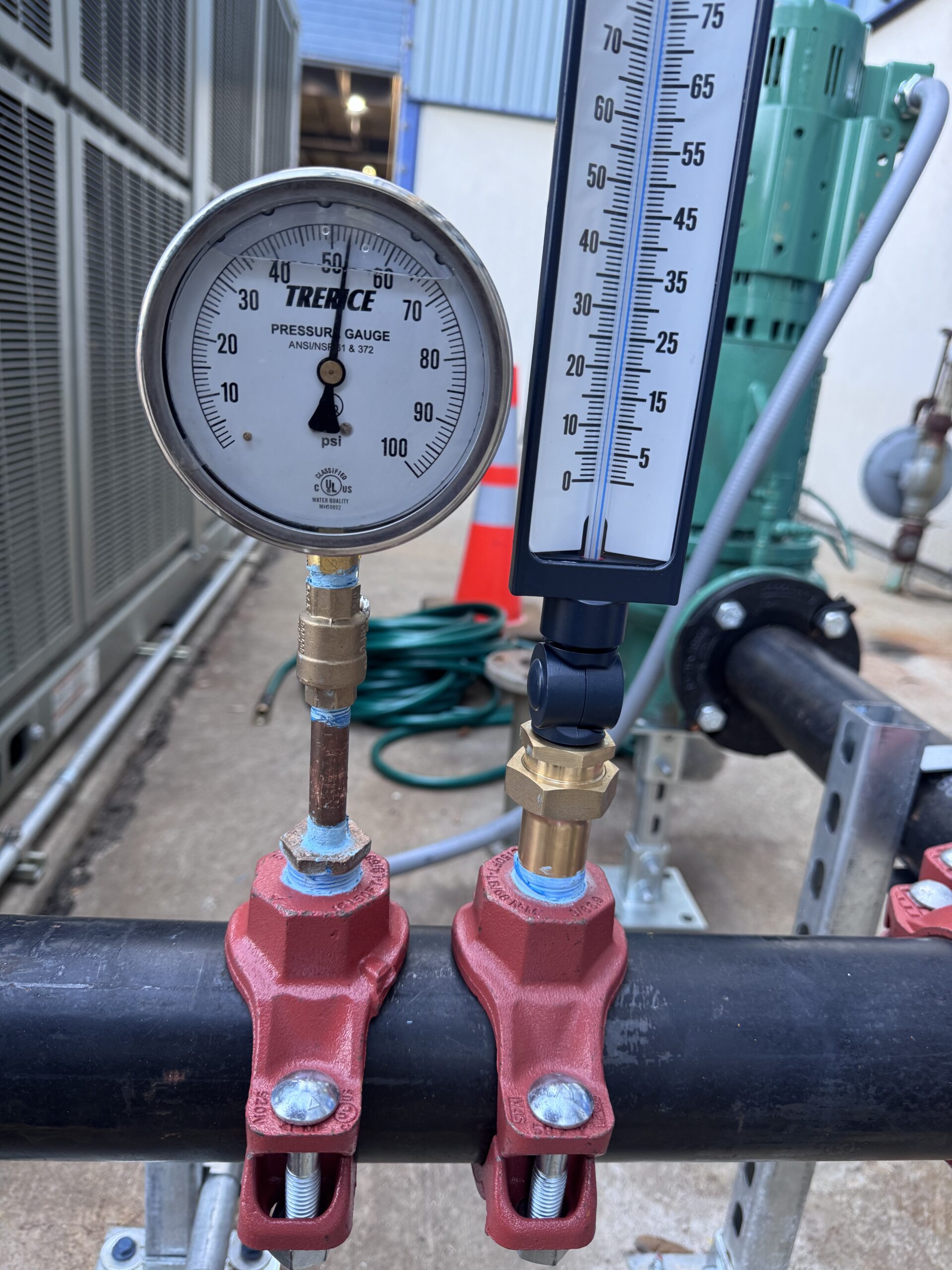
Mechanical Completion vs. Operational Readiness
Installation Complete Does Not Automatically Mean Ready for Turnover
Equipment may be physically installed and connected while additional project requirements remain before the facility can treat the replacement system as complete.
Startup, controls integration, testing and balancing, correction of discovered conditions, required functional verification and closeout documentation can all occur after the main installation work.
Mechanical completion and operational readiness are therefore related but different project milestones.
Earlier replacement-planning considerations are addressed in Planning a Commercial HVAC Equipment Replacement in an Operating Dallas Facility .
Post-Installation Project View
From Installation Complete to Mechanical Turnover
A public-facing view of the post-installation process can be organized into five broad phases.
Confirm the project has reached the condition required for startup.
Complete required manufacturer or equipment startup activities.
Establish the controls and operating interfaces required by the project.
Complete applicable TAB, functional checks and correction of discovered conditions.
Deliver required records and transition the completed scope to facility operations.
The detailed sequence depends on the equipment, contract documents and assigned project responsibilities.
Mechanical Completion
Establish What “Mechanically Complete” Means for the Project
Mechanical completion should be defined by project requirements, approved submittals and manufacturer requirements rather than by appearance alone.
Required equipment, piping, ductwork, drainage, supports and related mechanical work should be sufficiently complete for the next project phase.
Required permanent or project-approved power conditions should support the planned startup activities.
Necessary control devices and interfaces should be sufficiently available for the startup and operating conditions being evaluated.
Applicable airside or hydronic portions of the system should be ready for the post-installation work being performed.
Required project safety, access and facility conditions should support the planned startup and verification work.
Applicable approved equipment information and project requirements should be available to the responsible participants.
Pre-Startup Readiness
Startup Works Better When the Connected Project Conditions Are Ready
The applicable readiness requirements depend on the equipment and project. At a high level, owners and project teams should understand several categories.
The installed mechanical scope should be sufficiently complete for the equipment and connected system conditions being evaluated.
Required equipment and control power should be available in the condition defined by the project.
Necessary controls interfaces should be sufficiently available for the intended startup and operating checks.
Connected system conditions should support the startup, TAB or verification activity being performed.
Required manufacturer, controls, TAB, commissioning or owner participants should be coordinated where the project requires them.
Applicable project information should be available to support the required startup and verification activities.
Manufacturer Startup
Understand What OEM Startup Is Intended to Establish
Where manufacturer startup is required, it generally focuses on the equipment itself and the manufacturer’s requirements for placing that equipment into operation.
The required activities vary by equipment type, manufacturer, approved submittal and project requirements. The applicable manufacturer documentation should therefore govern the startup process.
A successful equipment startup does not by itself establish that the connected airside, hydronic, controls or broader building system has completed every TAB, functional or commissioning requirement applicable to the project.
Project Responsibilities
Startup and Turnover Can Involve Several Different Project Roles
Equipment replacement often requires participation beyond the mechanical installer. The contract documents and assigned scopes determine actual responsibility.
Supports readiness and correction of mechanical conditions within assigned scope.
Supports the applicable electrical conditions required by the project.
Supports the controls conditions and system integration assigned by the project.
Performs or supports manufacturer-required startup where specified or procured.
Performs TAB work when required under its assigned project scope.
Participates in broader verification or acceptance where required by the project.
EST should not be interpreted as the independent commissioning authority or certified TAB provider unless separately contracted and appropriately qualified for that role.
Controls Dependency
TAB Requires the System to Reach the Necessary Operating Conditions
Testing and balancing depends on equipment and controls being sufficiently functional to establish the operating conditions required by the project.
A controls issue can therefore affect when meaningful TAB can occur even when the physical equipment installation is substantially complete.
For more detail on that interface, review Controls and BAS Coordination During Commercial HVAC Equipment Replacement .
System Dependency
TAB Readiness Differs Between Airside and Hydronic Systems
Airside and waterside systems depend on different connected conditions before meaningful testing can occur.
The appropriate readiness criteria are governed by the system type, project documents and TAB scope rather than one universal checklist.
Where replacement work involves significant waterside activity, review Planning a Commercial Hydronic Shutdown in an Operating Facility .
Testing & Balancing Context
TAB Provides Measured Information About System Operation
Testing, adjusting and balancing can provide measured information about applicable airside or hydronic operating conditions and can identify conditions that require further investigation before project acceptance.
A TAB result does not by itself establish the cause of every condition. Findings may involve mechanical work, controls, equipment or existing-system conditions depending on the project.
For industry context on testing, adjusting and balancing, review NEBB’s Testing, Adjusting and Balancing resources . Inclusion of this reference does not represent EST as a NEBB-certified TAB firm.
Deficiency Resolution
Resolve and Re-Verify Conditions That Affect Acceptance
Startup, controls checkout and TAB can expose conditions that require correction before final acceptance.
Those conditions should be documented, assigned to the responsible project party, corrected and re-verified as required by the governing project requirements.
The specific correction workflow, responsible parties and acceptance authority depend on the contract, commissioning requirements and turnover plan.
Functional Verification
Verify Required Operating Responses After Startup
Where functional verification is required, the purpose is to confirm that the applicable system responds correctly under operating conditions defined by the project.
The actual test procedure, acceptance criteria and responsible party remain project-specific.
Process Distinction
Startup, Controls Checkout, TAB and Commissioning Answer Different Questions
These activities can overlap in schedule, but they should not be treated as interchangeable.
| Process | Primary Project Question |
|---|---|
| Equipment Startup | Can the equipment be placed into operation under the applicable manufacturer and project requirements? |
| Controls Checkout | Are the controls interfaces required for the planned operation sufficiently available and responsive? |
| TAB | Are applicable air or water quantities and system conditions being measured and documented as required? |
| Functional Verification | Does the applicable system respond correctly under the operating conditions defined by the project? |
| Commissioning | Where specified, has the broader project verification process demonstrated the required system performance and documentation? |
Additional commissioning context is available from ASHRAE’s commissioning resources and the U.S. Department of Energy Federal Energy Management Program . Formal commissioning requirements remain project-specific.
Return to Service
Transition From Construction Back to Facility Operations
Return to service should focus on the operating outcome required by the owner rather than a detailed public checklist of internal field actions.
Project-specific BAS, controls, TAB and acceptance requirements remain governed by the contract and responsible project parties.
Punch & Closeout
Distinguish Operational Blockers From Controlled Closeout Items
Not every remaining project item has the same effect on turnover. Some conditions may prevent required operation or acceptance, while other outstanding items may be managed through the project’s approved closeout process.
The contract documents, responsible parties and acceptance requirements determine which conditions actually prevent turnover.
Specific internal classification and correction procedures remain project-specific.
Mechanical Turnover Package
Turn Over More Than the Installed Equipment
Where required by the project, the turnover package should connect the final field condition with the records the facility needs to operate, maintain and understand the completed mechanical work.
Operator Handoff
Include the Facility Team in Final Turnover
Where owner training or operator handoff is required, facility personnel should receive the information necessary to understand the equipment and locate the applicable operating and maintenance documentation.
The required handoff content depends on the installed equipment, project documents and owner requirements.
EST Field Execution
Equipment Replacement Continues Through Verification and Turnover
Elevated Solutions Team supports commercial HVAC equipment replacement from field coordination and installation through startup requirements, controls interfaces, TAB coordination, correction of mechanical deficiencies within assigned scope and documented turnover where included in the project.
Startup, TAB & Turnover FAQ
Common Questions After Commercial HVAC Equipment Installation
Is manufacturer startup the same as commissioning?
No. Manufacturer startup generally focuses on placing the equipment into operation under applicable manufacturer requirements. Commissioning, where required, is a broader project-verification process involving the requirements and responsibilities defined by the project.
When should TAB occur after an HVAC replacement?
TAB should occur when the portions of the system being evaluated are sufficiently complete, operational and controllable to establish the required test conditions. Actual timing should follow the project requirements and assigned responsibilities.
Does controls integration need to be complete before TAB?
Controls functions needed to establish the operating conditions required for testing generally need to be sufficiently available. The exact level of controls completion depends on the system and TAB requirements.
What happens when startup or TAB identifies a problem?
Conditions affecting acceptance should be documented, assigned to the responsible project party, corrected and re-verified where required by the governing project documents.
What documents may be included at HVAC turnover?
Depending on project requirements, turnover may include equipment submittals, startup records, TAB documentation, controls information, O&M manuals, warranty information, required verification records, training records, as-built information and outstanding punch items.
When is commercial HVAC equipment replacement actually complete?
Completion is determined by the project-specific installation, startup, verification, documentation, punch and acceptance requirements—not simply by physical equipment installation.
Commercial HVAC Equipment Replacement
Planning an HVAC Replacement That Has to Reach a Defined Turnover Condition?
Elevated Solutions Team supports commercial HVAC equipment replacement from existing-condition coordination and installation through startup requirements, controls interfaces, applicable TAB coordination and mechanical turnover where included in the assigned project scope.