
Hydronic System Planning • Operating Facilities
Planning a Commercial Hydronic Shutdown in an Operating Facility
Commercial hydronic shutdown planning has to account for the existing piping system, available isolation, facility operations and the work required to restore the affected system to the required operating condition.
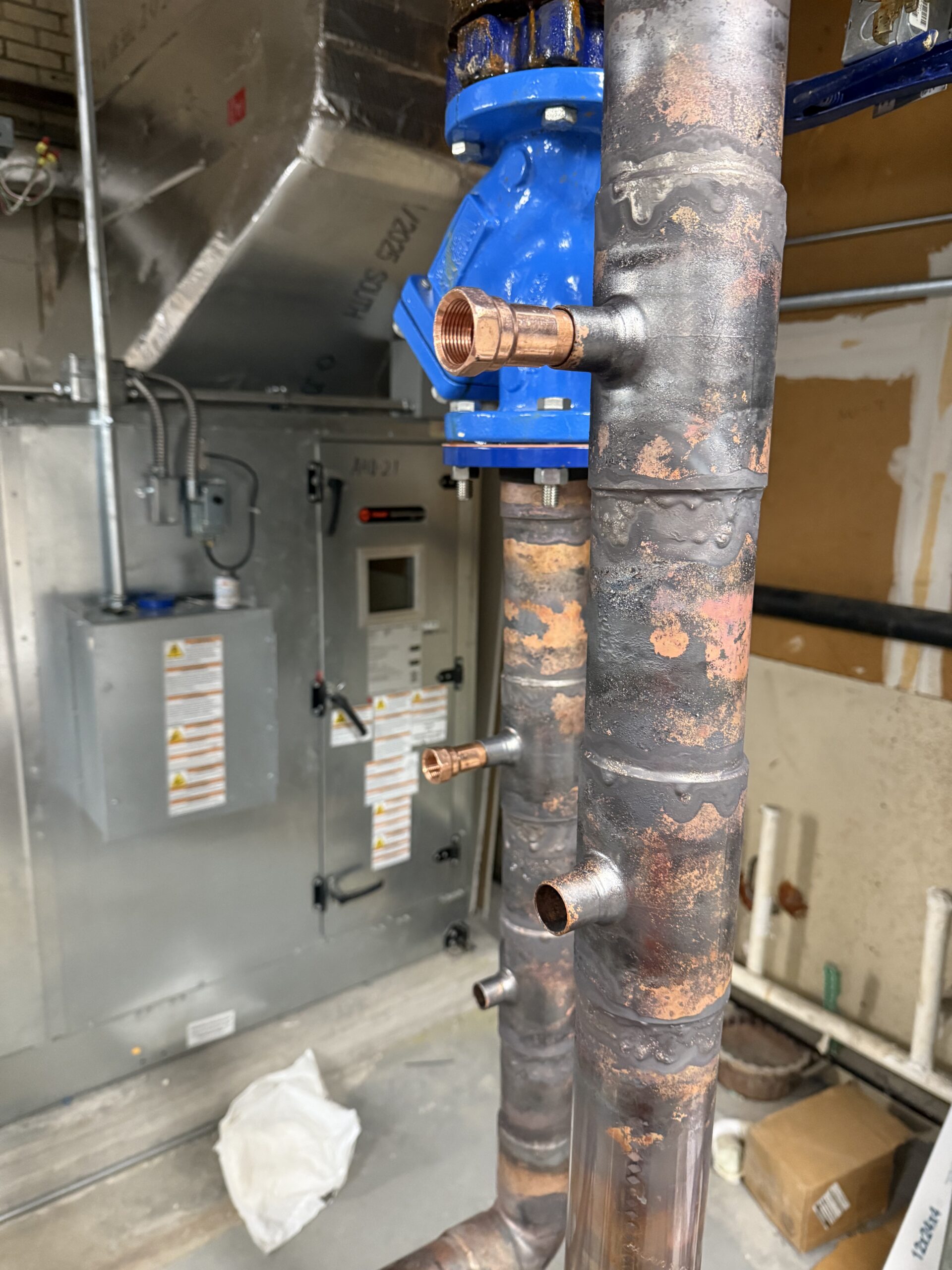
Shutdown Planning
A Hydronic Shutdown Is More Than a Pipe Modification
In an operating facility, the project team has to consider what the affected system serves, how the planned work will affect facility operations, whether the intended isolation is suitable, and what must occur before the system can return to normal operation.
That makes the outage a facility-planning issue as well as a mechanical one. Testing, fluid restoration, startup and final handoff should be considered before the outage window is established.
System Boundary Verification
Verify the Affected System Boundary Before the Outage Is Scheduled
Record drawings and valve tags are useful starting points, but shutdown planning should be based on verified existing conditions.
The project team should establish the affected piping boundary, connected equipment, available isolation and system relationships that can materially affect fluid removal and restoration.
The detailed field-verification method depends on the facility, system configuration, governing project requirements and assigned mechanical scope.
For broader educational information on hydronic heating and cooling systems, review the ASHRAE Handbook chapter on Hydronic Heating and Cooling .
Isolation Suitability
Confirm That the Planned Isolation Is Suitable for the Work
Existing valves and system paths should be evaluated before the outage because the shutdown depends on the intended system boundary performing as required.
Available isolation should be considered in the context of actual existing-system conditions rather than drawings alone.
The project team should understand whether the planned isolation supports the defined mechanical scope and facility outage.
Field conditions, undocumented modifications or alternate system paths can affect the planned outage and should be understood beforehand.
Where isolation is critical to the work, project limitations should be understood before the approved shutdown window begins. Detailed field verification and contingency procedures remain project-specific.
Fluid Removal & Restoration
Account for Fluid Removal and Restoration in the Outage Plan
Fluid removal can materially affect outage duration and return-to-service planning.
The project team should account for the amount and type of fluid affected, facility handling restrictions and the time needed to restore the system to the required operating condition.
Specific drainage, containment, treatment and disposal methods remain project-specific.
Facility Outage
Build the Outage Around Facility Operations
The allowable shutdown period should account for more than the physical piping modification.
The owner and project team should consider the affected facility operation, the approved mechanical work, required verification and the time needed to restore the system to the required operating condition.
Where project conditions require continued service, temporary heating or cooling should be addressed by the governing project plan.
High-Level Shutdown View
Organize the Shutdown Around Three Project Phases
A public-facing planning view can describe the outage without publishing the field procedure used to execute it.
Confirm the affected system, facility impact, required participants and restoration requirements.
Complete the assigned mechanical work within the authorized outage and governing project requirements.
Complete required verification, restore the required fluid condition, support startup and confirm the required return-to-service outcome.
Detailed isolation, fluid-removal, testing and restoration procedures remain project-specific.
Tie-In & Interface Readiness
Resolve Mechanical Interfaces Before the Outage
A shutdown window is easier to control when the interfaces required for the approved work have already been reconciled.
The replacement or modification should have a defined relationship to the existing piping and approved scope.
Supporting conditions that materially affect the approved piping work should be understood before the outage begins.
Equipment connection requirements and related mechanical interfaces should be reconciled before the affected system is taken offline.
Detailed dimensions, cut locations, fabrication decisions, specialty selections and installation sequencing remain part of project-specific field planning.
Return to Service
Include System Restoration in the Shutdown Plan
The outage is not complete simply because the piping modification is physically finished. Applicable restoration and verification requirements still have to be satisfied.
The applicable testing, treatment, refill, startup, TAB and acceptance requirements depend on the system and governing project documents.
Verification & Handoff
Define the Required Operating Outcome Before the Outage Begins
Return to service should confirm that the affected mechanical scope has reached the operating condition required by the project, applicable testing or startup activities have been addressed, and outstanding items or required documentation are clearly identified.
This outcome-based approach is especially important when the shutdown supports equipment replacement or other work requiring multiple project participants.
For additional owner-oriented verification and handoff context, review the U.S. Department of Energy Federal Energy Management Program’s Commissioning Process for Federal Facilities . Formal commissioning requirements remain project-specific.
Occupied & Existing Facilities
Hydronic Shutdowns Often Occur Inside Broader Facility-Renewal Work
Existing facilities may require hydronic modifications, equipment connections, pump or valve work and phased mechanical renewal while other areas of the building remain in operation.
Where that work is delivered through an existing-facility or public procurement pathway, review EST’s JOC & Facility Renewal capability.
Equipment Replacement Context
When the Hydronic Shutdown Supports Major Equipment Replacement
A hydronic outage may be one component of a larger chiller, boiler, air-handling or other water-connected equipment replacement.
In that situation, the shutdown has to align with the broader equipment replacement requirements, including the mechanical interfaces, applicable controls, startup and turnover responsibilities defined by the project.
Review EST’s Commercial HVAC Equipment Replacement & Service when the hydronic work supports a larger mechanical equipment-renewal scope.
Facility-Team Planning Questions
Six Questions to Resolve Before the Hydronic Outage
These questions help owners and project teams evaluate readiness without turning the article into a field shutdown procedure.
Hydronic Shutdown FAQ
Common Questions About Commercial Hydronic Shutdown Planning
Why should existing isolation be evaluated before a hydronic shutdown?
Because the planned outage depends on the intended system boundary supporting the approved work. Existing conditions or undocumented system changes can affect that boundary.
Why can fluid removal affect the outage duration?
The amount and type of fluid involved, facility restrictions and the requirements for restoring the system can all influence the time needed for the planned outage.
Should testing be considered before the outage begins?
Yes. Required testing and verification should be identified early enough to be included in the planned path back to operation. The applicable methods are project-specific.
When should temporary heating or cooling be considered?
Temporary service should be evaluated when facility operations, weather conditions or project requirements do not allow the planned hydronic outage without maintaining a required building condition.
When does a hydronic shutdown become part of an HVAC equipment replacement?
When water-connected equipment is being replaced, the hydronic outage may become one element of a broader mechanical replacement scope involving equipment interfaces, controls, startup and turnover.
Can hydronic work be planned in an occupied facility?
Yes, when the project requirements address the affected system, facility operations, allowable outage, required temporary conditions and the expected return-to-service outcome.
Hydronic Piping & Mechanical Rooms
Planning Hydronic Work in an Existing Facility?
Elevated Solutions Team supports commercial hydronic piping, mechanical-room modifications, pumps, valves, equipment connections and related shutdown coordination where included in the assigned mechanical scope.