Planning Mechanical Work in an Occupied Public Facility
PUBLIC FACILITIES • MECHANICAL PROJECT PLANNING
Planning Mechanical Work in an
Occupied Public Facility
Mechanical construction inside an operating public facility has to be
coordinated around more than the installed equipment. Facility
operations, occupants, existing conditions, access, shutdown limits,
inspections, testing and return-to-service expectations can all affect
how the project is planned.
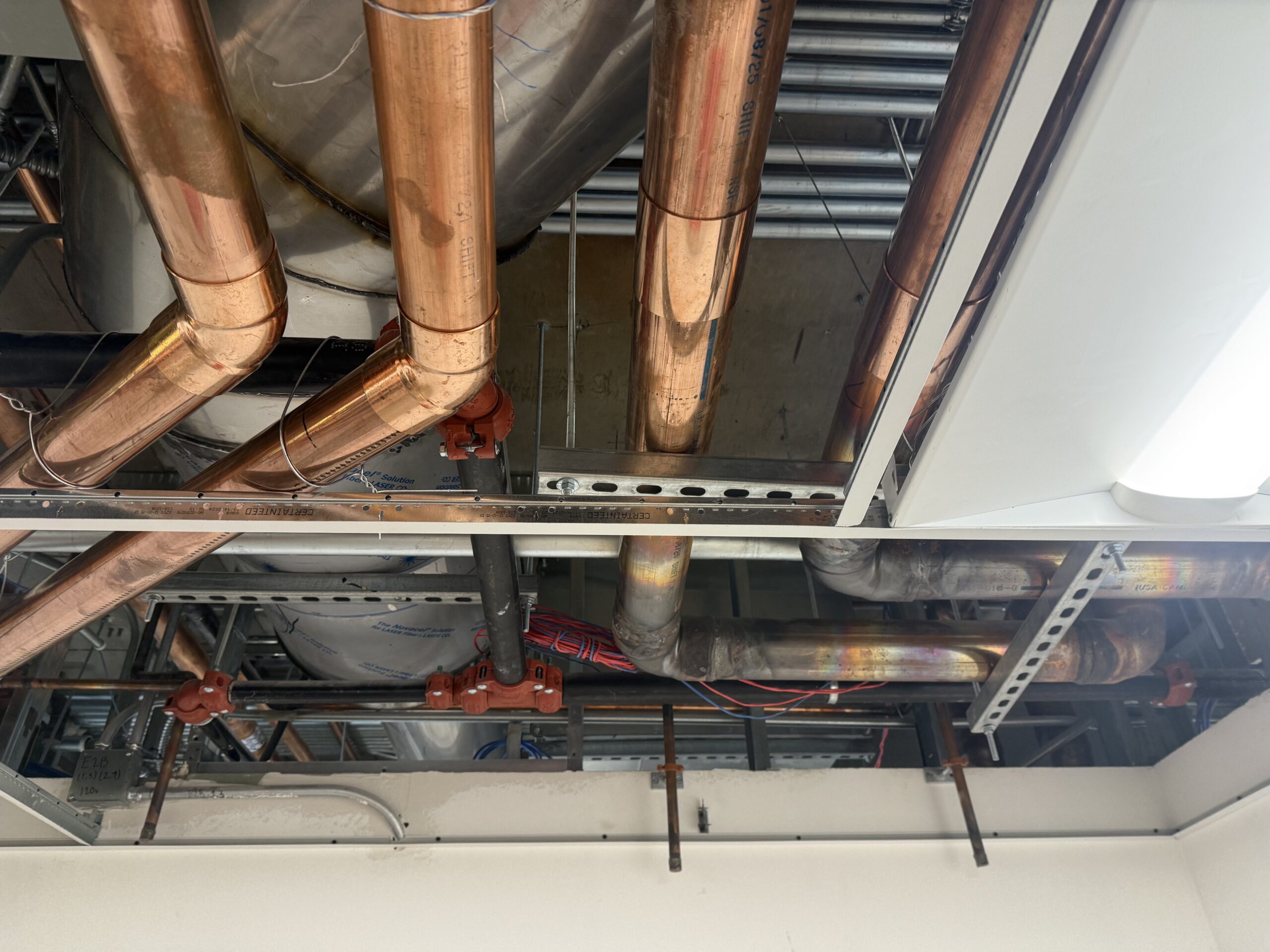
ACTIVE-FACILITY EXECUTION
Mechanical scope has to fit the operating facility around it.
Existing conditions, occupancy, access and system continuity can
materially affect project planning.
FACILITY RISK MAP
Mechanical Scope Is Only One Part of the Facility Plan
Owners and project teams should understand the operating conditions that can
influence when, where and how mechanical work can occur.
Occupancy
People may remain in or around the affected work areas.
System Continuity
Some equipment, systems or spaces may need to remain operational.
Access & Security
Facility requirements may affect entry, deliveries and work periods.
Shutdown Limits
Allowable system interruption may be tightly controlled.
Verification
Testing and inspection requirements can affect project milestones.
Turnover
The facility needs a clear path back to the required operating condition.
FACILITY OPERATIONS
Start With What the Facility Has to Keep Doing
Occupied-facility planning begins with the operating requirement. The project
team should understand which spaces remain in use, which building functions
are sensitive to disruption, what systems must continue operating and what
limitations apply to outages or construction access.
Those conditions can affect scheduling, communication, temporary-service
requirements and the amount of work that can reasonably occur during a
given period.
OWNER PERSPECTIVE
The mechanical project has to support the facility’s operating requirements while the work is being completed.
EXISTING-CONDITION VERIFICATION
Verify the Conditions That Can Change the Project Plan
Existing-facility work should be planned from actual field conditions rather
than record documents alone. Before critical work proceeds, the project team
should confirm the conditions that materially affect scope, facility continuity
and return to service.
Affected Mechanical Systems
Confirm the major systems and equipment involved in the planned work.
Access & Material Movement
Understand the practical limitations that affect equipment and workforce access.
Connected Interfaces
Recognize electrical, controls and other building-system relationships that may affect the scope.
Facility Constraints
Identify occupancy, operating-hour and system-continuity requirements.
Record-to-Field Differences
Identify material differences between available records and actual field
conditions so they can be addressed through the governing project requirements.
The level of measurement, testing and documentation required is
project-specific and should follow the governing contract documents,
owner requirements and assigned scope.
OPERATING CONDITIONS
Conditions That Can Affect Mechanical Work
Occupied facilities introduce conditions that can change when and how
mechanical work can occur. Those conditions should be understood before
committing a critical work window.
| Facility Condition | Why It Matters |
|---|---|
| Occupancy | May limit work areas, disruptive activities and access periods. |
| Shutdown Restrictions | Affect when building systems can be interrupted and for how long. |
| Security & Access | Can affect crew entry, deliveries and access to mechanical spaces. |
| Inspection Requirements | May affect when completed work can be concealed or returned to service. |
| Fixed Operating Milestones | Can create hard reopening or return-to-service requirements. |
ACCESS & SECURITY
Account for Facility Access Before the Work Window
Public and institutional facilities may have access, security,
delivery or work-hour restrictions that affect the project schedule.
These requirements should be understood early enough to avoid conflicts
with planned mechanical work.
Owners and project teams should consider whether facility procedures
affect workforce entry, access to mechanical spaces, material movement
or approved working periods.
SHUTDOWN PLANNING
Understand What the Planned Outage Will Affect
Before a mechanical shutdown, the project team should understand the
systems and spaces affected, the allowable interruption period, who has
authority to approve the outage, whether temporary service is required,
and what operating condition is expected before the system is returned
to service.
For a narrower waterside discussion, review
Planning a Commercial Hydronic Shutdown in an Operating Facility
.

of mechanical work in an operating facility.
FIELD CONDITION
Existing Conditions Can Change the Planned Outage
Record drawings and visible system components provide useful project
information, but existing buildings can contain conditions that differ
from available records.
Where existing isolation, piping configuration or other field conditions
affect the planned scope, those conditions should be sufficiently
understood before the critical work period.
The specific verification methods and project procedures depend on the
contract, owner requirements and assigned mechanical scope.
TEMPORARY MECHANICAL SERVICE
Determine Whether Facility Operations Require Temporary Service
Some projects can tolerate a planned mechanical outage. Others may require
temporary heating, cooling, ventilation or another temporary operating
condition because of facility use, environmental requirements or contract
obligations.
Whether temporary service is needed, what it must support and how long it
remains in place are project-specific decisions that should be established
from the facility requirements and governing project documents.
OCCUPIED-FACILITY PLANNING AREAS
Four Areas That Should Be Addressed in Occupied-Facility Planning
Four planning areas help owners and project teams organize the major
conditions that can affect mechanical work in an occupied facility.
01
Understand Conditions
Confirm the facility requirements and existing conditions that materially
affect the planned work.
02
Coordinate Facility Impacts
Understand access, shutdown limitations, temporary conditions and the
project participants required by the approved scope.
03
Address the Approved Work
Complete the assigned mechanical scope within the governing project
requirements and facility constraints.
04
Verify & Turn Over
Address required verification, return-to-service expectations,
documentation and owner handoff.
Detailed execution requirements remain governed by the project documents,
facility procedures and assigned scope.
FACILITY INTERFACE
Access and Material Movement Can Affect Execution
Mechanical construction may involve equipment deliveries, piping or duct
materials, lifts, tools, temporary work areas and removal of demolished
materials. In an occupied facility, those activities have to coexist with
building operations and approved access routes.
The project team should therefore understand the facility restrictions that
materially affect deliveries, staging, equipment movement and separation
between construction activity and occupied areas.
TRADE & SYSTEM INTERFACES
Mechanical Work Rarely Exists in Isolation
Facility-renewal projects often involve interfaces outside the core
mechanical installation. Those relationships should be understood early
enough to support the approved project scope and schedule.
Equipment Power
Electrical requirements can affect equipment replacement and readiness.
BAS & Control Interfaces
Controls relationships can affect startup, operation and acceptance.
Supports & Penetrations
Existing building conditions may affect equipment and system installation.
Roof & Exterior Interfaces
Exterior work may require coordination with other building systems or trades.
Startup / TAB / Acceptance
Required verification activities can affect project completion milestones.
Owner / GC / Prime Coordination
Access, occupancy, schedule and acceptance requirements can cross project roles.
For a controls-specific discussion, review
Controls and BAS Coordination During Commercial HVAC Equipment Replacement
.
PROJECT COORDINATION
Confirm Critical Requirements Before the Planned Work Period
Major equipment, specialty materials, supporting participants and required
project services can influence when facility work can realistically proceed.
Confirm the Major Requirements Affecting the Approved Work
Before a planned outage or other critical work period, the owner and
project team should confirm that the major requirements affecting the
approved work have been sufficiently coordinated. These may include
equipment or material availability, facility access, required supporting
participants, temporary operating conditions and the requirements for
returning affected systems to service. Final coordination and authorization requirements remain project-specific.
INSPECTION & VERIFICATION
Identify Required Verification Before Work Is Concealed or Returned to Service
Inspection, testing and witness requirements vary by project. Depending on
the scope, verification may involve mechanical installation, system testing,
electrical or controls interfaces, equipment startup, balancing,
commissioning or owner review.
Those requirements should be understood early enough that required
verification can occur before affected work becomes inaccessible or the
facility is expected to resume normal operation.
SAFETY REFERENCE
Hazardous-energy requirements depend on the work being performed and the
applicable standard. OSHA maintains
Control of Hazardous Energy standards and resources
.
Applicable project procedures and employer requirements govern the actual work.
RETURN TO SERVICE
Define the Required Operating Outcome Before the Outage Begins
Return to service should focus on the outcomes the owner needs before the
affected system or space resumes normal operation.
Required installation and system verification is complete.
Required startup or operating checks have been addressed.
The affected facility area is ready for the required operating condition.
Outstanding corrective or documentation items are clearly identified.
For a more focused discussion of system verification and handoff, review
Startup, TAB and Mechanical Turnover After Commercial HVAC Equipment Replacement
.
FACILITY HANDOFF REFERENCE
DOE’s Federal Energy Management Program provides additional owner-oriented
information regarding commissioning and facility handoff through its
Commissioning Process for Federal Facilities
.
Formal commissioning requirements remain project-specific.
EXISTING-FACILITY UNCERTAINTY
Allow for Conditions That May Affect the Planned Work
Existing buildings can contain conditions that are not fully visible or
accurately represented before construction begins. Examples can include
differences in existing system configuration, access conflicts, concealed
deterioration or conditions that affect the planned outage.
The project team should understand how material discoveries will be
addressed under the governing contract rather than assuming every existing
condition will match the original project information.
PROJECT DOCUMENTATION
Keep Facility Communication and Project Records Connected
Documentation requirements vary, but occupied-facility work generally
benefits from clear information about current project status, required
verification and final handoff.
COMMUNICATION
Facility & Project Coordination
Keep responsible project parties informed about significant outages,
facility impacts and relevant execution milestones.
PROJECT RECORDS
Required Project Records
Maintain the records required by the contract, owner and applicable
project procedures.
HANDOFF
Closeout & Outstanding Items
Clearly identify required closeout information and any unresolved items
that remain after affected systems return to service.
EXISTING CONDITIONS & SCOPE
Document Material Changes in Existing Conditions
When field conditions differ materially from the defined scope or project
documents, the condition should be documented and addressed under the
governing contract requirements and direction of the responsible project parties.
Notice, authorization and record requirements remain project-specific.
FACILITY-TEAM PLANNING QUESTIONS
Questions to Resolve Before Critical Mechanical Work Begins
These questions provide an owner-facing planning framework. Project-specific
requirements remain governed by the contract documents, facility procedures
and assigned scopes.
EST FIELD EXECUTION
Facility-Renewal Work Has to Fit the Building Around It
Elevated Solutions Team supports commercial, institutional and
public-facility mechanical projects involving equipment replacement,
hydronic and airside modifications, occupied-facility coordination,
testing interfaces and project turnover where included in the assigned scope.
OCCUPIED FACILITY FAQ
Common Questions About Mechanical Work in Operating Public Facilities
Why is mechanical work more complicated in an occupied public facility?
Construction has to be coordinated around ongoing facility operations,
occupants, access restrictions, shutdown limitations, required
verification and the conditions needed to return affected systems or
spaces to normal use.
What should an owner understand before a mechanical shutdown?
The project team should understand which systems and spaces are affected,
the allowable interruption period, shutdown authority, whether temporary
service is required and the expected return-to-service condition.
When should temporary HVAC or mechanical service be considered?
Temporary service should be evaluated when facility operations,
environmental requirements or project documents do not allow the
planned outage without maintaining a required operating condition.
Why are existing-condition reviews important?
Existing buildings can differ from record documents. Conditions that
affect scope, access, system continuity or return to service should be
sufficiently understood before critical work proceeds.
How should unexpected existing conditions be handled?
Material differences should be documented and addressed under the
governing contract requirements and direction of the responsible project parties.
What does occupied-facility turnover involve?
Turnover should establish that the affected systems have reached the
required operating condition, required verification is complete and
remaining documentation or corrective items are clearly identified.
JOC • FACILITY RENEWAL • PUBLIC FACILITIES
Planning Mechanical Work in an Operating Facility?
Elevated Solutions Team supports commercial, institutional and
public-facility mechanical projects involving equipment replacement,
hydronic and airside systems, occupied-facility coordination and
facility-renewal execution.